
Here's something I see in almost every private-pay home care agency I talk to: the owner is spending money on ads, boosting Facebook posts, and paying someone to "do SEO," and new clients still mostly come from the same place they always have. A discharge planner who likes them. A retirement home that trusts them. A daughter who heard about them from a friend at work.
That isn't a coincidence. It's how home care gets bought. And if that's how your clients actually find you, your marketing should be built around it — on purpose, not by accident.
That's the idea behind the Referral Engine Sprint. It's a short, focused project that turns the referrals you already get by luck into a system you can see, measure, and grow.
How families actually choose home care
Most home care decisions aren't planned. Mom falls. Dad gets discharged sooner than anyone expected. A parent who was "doing fine" suddenly isn't. The person making the call is usually an adult child juggling a job, their own kids, and a lot of guilt, and they need an answer this week, sometimes today.
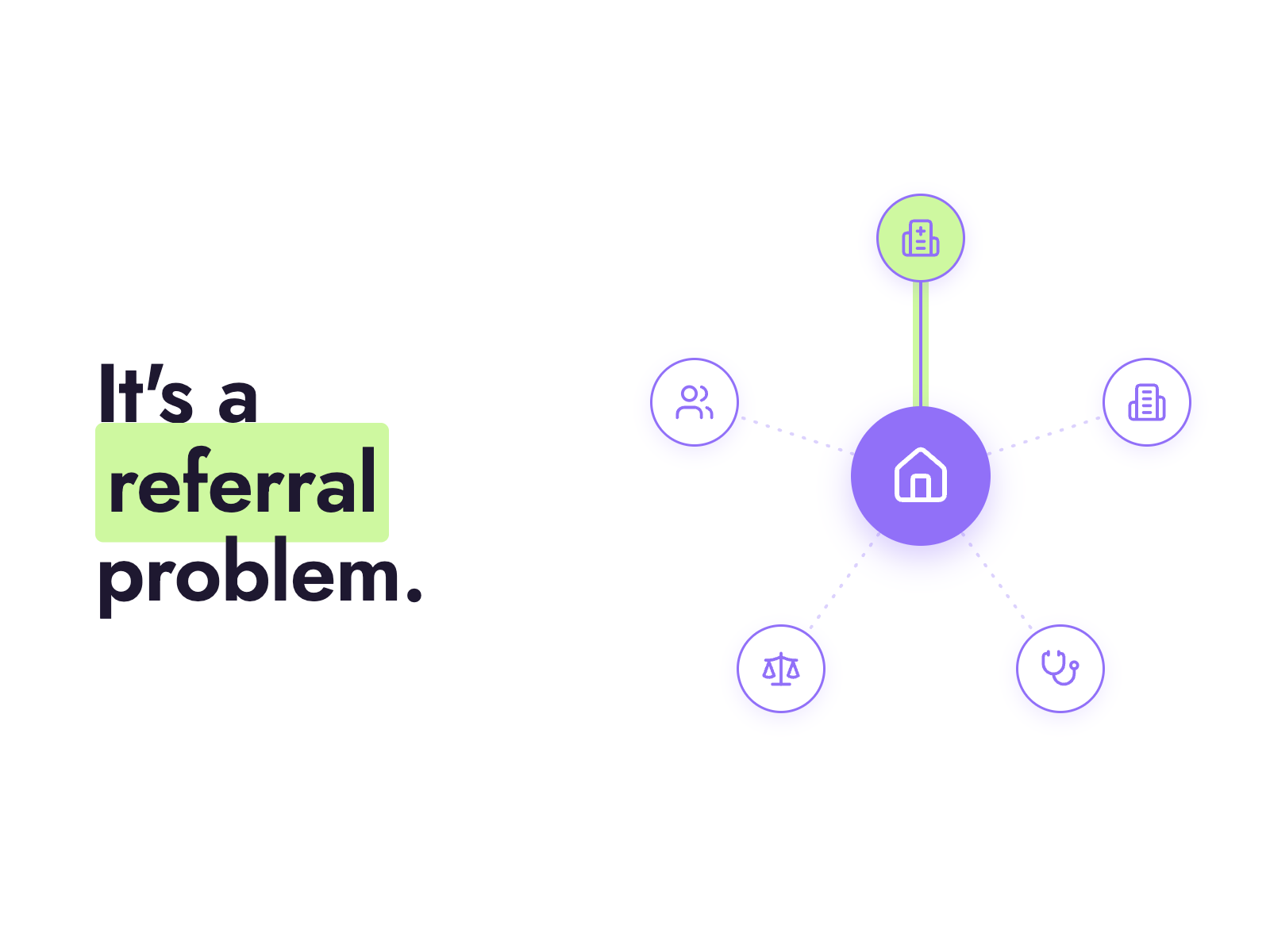
That buyer doesn't comparison-shop the way you'd buy a laptop. They ask someone they trust: "Who should I call?" The people they ask tend to be the same handful:
Hospital discharge planners and social workers
Retirement home and assisted living staff
Family doctors and nurse practitioners
Estate and elder-law lawyers
Financial planners who work with older clients
Friends, coworkers, and faith or community groups who've been through it
Then they Google the name they were given. If your Google profile is half-finished, your reviews are thin, or your website makes them hunt for a phone number, you lose them right there, even though someone handed them your name.
So you've got two jobs: make sure the trusted people say your name, and make sure the family doesn't bail when they look you up. The sprint fixes both.
What the Referral Engine Sprint is
The Referral Engine Sprint is a fixed-scope, fixed-price project for private-pay home care agencies. Over about four weeks, I map where your clients really come from, build a simple program to grow those sources, and fix the online touchpoints that families check before they call.
It's not a retainer. It's not an ad campaign. And it's not a brand refresh with a new logo. It's the plumbing that sits underneath all of those, and most agencies don't have it.
Three things make it a sprint rather than "marketing support":
A clear start and finish. You know what you're getting and when.
Built for your team to run. You don't need me forever. Your intake coordinator or community liaison owns it once the sprint wraps.
Measured by enquiries, not likes. Every piece ties back to one question: did more of the right families call you?
The five parts of the sprint
1. Referral source audit (week 1)
I start with your own data, because your gut and your intake log rarely agree. I go through the last 6 to 12 months of new clients and sort them by where they came from. Then I talk to your intake team about the calls that didn't convert, and why.
Most agencies find that two or three sources drive most of their new clients, and that one or two promising sources have gone quiet without anyone noticing. That's where the opportunity usually hides.
2. Referral partner map (week 1 to 2)
Next, I build a list of the specific people and places that should be sending you families in your service area: the hospitals and their discharge teams, the retirement homes, the family health teams, the lawyers and planners. Each one gets a priority, an owner on your team, and a reason they'd care about you specifically.
That last part matters. "We provide compassionate care" isn't a reason. "We can start care within 48 hours, including weekends" is, if it's true.
3. Partner outreach kit (week 2 to 3)
This is what your team uses to start and keep those relationships going:
A one-page referral sheet for professionals, with what you do, where you serve, and how fast you can start
Short email and phone scripts for first contact and follow-up
A simple visit plan for in-person drop-ins (yes, people still do these, and they still work)
A "we got your referral" follow-up process, so the person who sent you a family hears back. Nothing kills a referral source faster than silence.
4. Family-facing fixes (week 2 to 3)
While the outreach gets built, I fix what families see when they look you up:
Your Google Business Profile: categories, service areas, hours, photos, and services, all filled in properly
A review process that asks happy families at the right moment and replies to every review, good or bad
An "urgent care needs" landing page with a clear phone number, what happens on the first call, and how fast you can start
A quick check of your enquiry path: how long it takes your team to call back, and what happens after hours
5. Tracking and handoff (week 4)
Finally, I set up simple tracking so you know which sources send families and which of those become clients. Usually that's a spreadsheet or a few fields in the CRM you already use, not new software. Then I walk your team through the whole system and leave you with a 90-day plan to run it.
Where paid ads fit
Paid ads aren't the engine, but they can be a useful supporting tactic. They work best after the referral system and your family-facing fixes are in place. Send paid traffic to a weak Google profile or a confusing website and you're paying to lose families faster.
Once the basics are solid, a small, tightly focused ad budget can help in three ways:
Catch families who are already searching. Google Search ads on high-intent phrases like "home care near me" or "in-home care [your city]" reach people in the middle of a crisis, pointed straight at your urgent-needs page.
Protect your name. When a discharge planner gives a family your name, they'll search for it. If a competitor is bidding on your agency's name, a branded search ad makes sure you show up first.
Stay visible in your service area. Local awareness ads aimed at your service area can keep your name familiar to the adult children who'll be making this call down the road, so it rings a bell when a professional mentions you.
A few ground rules:
Measure ads like any other referral source. Track cost per enquiry and cost per new client, side by side with your referral partners. If ads cost more to bring in a client than a retirement home relationship, you'll see it.
Respect platform health policies. Google and Meta both limit targeting and remarketing based on health conditions. Don't build audiences around a diagnosis or retarget people based on health-related browsing. Check each platform's current policy before launch.
The same claim rules apply. Every promise in an ad ("start within 48 hours," "available 24/7") has to be true, just like on your website.
If you want ads as part of the sprint, I'll scope a starter campaign as an add-on in week 4, built on the tracking from part 5. If not, your 90-day plan will flag when it makes sense to start.
What you walk away with
By the end of the sprint, you have:
A clear picture of where your clients come from today, and which sources are worth more of your time
A prioritized list of referral partners, each with an owner on your team
A ready-to-use outreach kit: referral sheet, scripts, visit plan, and follow-up process
A Google profile, review process, and urgent-needs page that don't lose families at the last step
Simple tracking and a 90-day plan your team can run without me, including when paid ads make sense
Here's how to judge whether it's working. In the first 30 to 60 days, watch the early signals: partner meetings booked, referral sheets in the right hands, review count, and how quickly your team returns enquiries. Over 90 days and beyond, watch the numbers that pay the bills: enquiries by source, and how many of those become clients.
I'll be straight with you: referral relationships take time. A discharge planner who's never heard of you won't send you families the week after you drop off a one-pager. The sprint gives you the system. Consistently using it is what brings in the families.
Doing it without breaking the rules
Healthcare marketing has guardrails, and home care is no exception. The sprint is built around them from day one, not patched afterwards. These are the big ones in Ontario:
Client stories need consent. Under PHIPA, you need clear written consent before you use a client's name, photo, or story in your marketing, even if the family is thrilled with you.
Your staff's regulators have their own rules. Nurses, physiotherapists, and other regulated professionals on your team answer to their college, and some colleges limit testimonials or comparative claims in advertising. Check each one that applies to your team before anything goes live.
Claims have to be true. "24/7 availability," "start within 48 hours," and "certified caregivers" are great selling points, but only if you can back them up every time. The Competition Act treats misleading claims seriously, and so do families.
No paying for referrals. Never offer gifts, fees, or perks to discharge planners, physicians, or other professionals in exchange for sending clients. It puts them in a conflict of interest, may break their own professional rules, and it's the fastest way to get banned from a hospital floor. Win them over by being reliable.
Email outreach falls under CASL. Professional contact info that's publicly posted may count as implied consent for a relevant business message, but every email still needs your identity and a working unsubscribe.
I'm a marketer, not a lawyer, so for anything borderline I'll flag it and suggest a quick review by your legal or privacy lead.
Who it's for (and who it isn't)
The sprint is a good fit if you:
Run a private-pay or mixed home care agency, independent or a franchise location
Have the staff to take on more clients, or a realistic plan to hire them
Get some referrals already but can't say where most of them come from
Have someone on your team who can own outreach after the sprint, even a few hours a week
It's probably not the right fit, at least not yet, if:
You can't staff the shifts you have. More referrals will only make it worse. If hiring is your real bottleneck, fix that first. Burning a discharge planner's trust because you couldn't start care is worse than never meeting them.
Most of your work comes through Ontario Health atHome contracts. That volume is driven by contracts and procurement, not by families choosing you. The sprint helps your private-pay side, not your contract side.
You're a franchise with tight brand rules. Check your franchise agreement first. Most of this is local relationship work, which is usually allowed, but your franchisor may already provide some of it.
You need results in two weeks. Fixing your Google profile and enquiry process can help quickly. Referral partnerships take months to mature.
The takeaway
If families find you through people they trust, then your best marketing investment is making those people more likely to say your name, and making sure families don't drop off when they look you up. Paid ads can add reach once that system is working. They can't replace a referral that comes with someone's trust attached.
You don't need a bigger budget for that. You need a system: know your sources, build relationships on purpose, follow up every time, and measure what works.
Want to know where your referrals are really coming from? Book a call and I'll walk you through what a Referral Engine Sprint would look like for your agency.